








Home :: Festival tour :: Holi
HOLI
FACTS & FIGURES
Religion - Hindu
Celebration - Festival of Colours
In the month - March/April
Duration - Two days
THE FESTIVAL
Holi is a festival of colour and is celebrated all over India. It is also celebrated by Indians residing out of India. This festival comes on the full moon day of ‘phagun’ - a Hindu month. This festival brings new hope for all the people as it marks the end of chilled winter days and the beginning of the summer. People forget their enmity and throw away their worries. Every nook and corner presents a colourful sight.
Everywhere, people - young or old are drenched with different colours and water. There are balloons of coloured water bursting and long ‘pichkaris’ squirting coloured water. People in small groups are seen singing, dancing and throwing colours on each other.
CELEBRATIONS
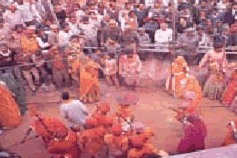
Holi is celebrated all over India, but is more predominant in North India. Celebrations start a week earlier than rest of India. Men of Nandagaon (place where Lord Krishna grew up) raid Barsana (place where Radha grew up) with hopes of raising their flag over Shri Radhikaji's temple. They receive a thunderous welcome as the women of Barsana greet them with long wooden sticks. The men are soundly beaten (mock) as they attempt to rush through town to reach the relative safety of Shri Radhikaji's temple. Men are well padded as they are not allowed to retaliate. In this mock battle the men try their best not to be captured. Unlucky captives can be forcefully led away, thrashed and dressed in female attire before being made to dance.
LEGENDS
According to legend Hirankashyap was a very powerful ‘rakshasha’ (demon). After defeating the Gods he had become egoistic and issued an order that no one should pray to God. In fact, not even to take the name of God. Due to fear people started praying him. His son Pralhad was a true devotee of God. He didn't obey his father's order. Angry with him, Hirankashyap ordered for the most rigorous punishments to him. But this did no harm to Prahlad. Hirankashyap had a sister by the name of Holika. She had been granted a boon that fire will do no harm to her. Hiranyakashyap ordered Holika to take Prahlad on her lap and sit on a bed of fire. Holika was burnt in the fire and Prahlad survived with no harm done to him. As a remembrance to that event people celebrate Holi by burning wood and pray to Goddess Holi for their well being. Holi is also associated with the immortal love of Krishna and Radha. Hiranyakashyap was later killed by Narsimha (an incarnation of Lord Vishnu).




